
The muscles
Allowing our movements
The muscle is an organ which can actively contact and relax. Due to that faculity it allows our body to move. Additional it forms our body what can be perceived from others.
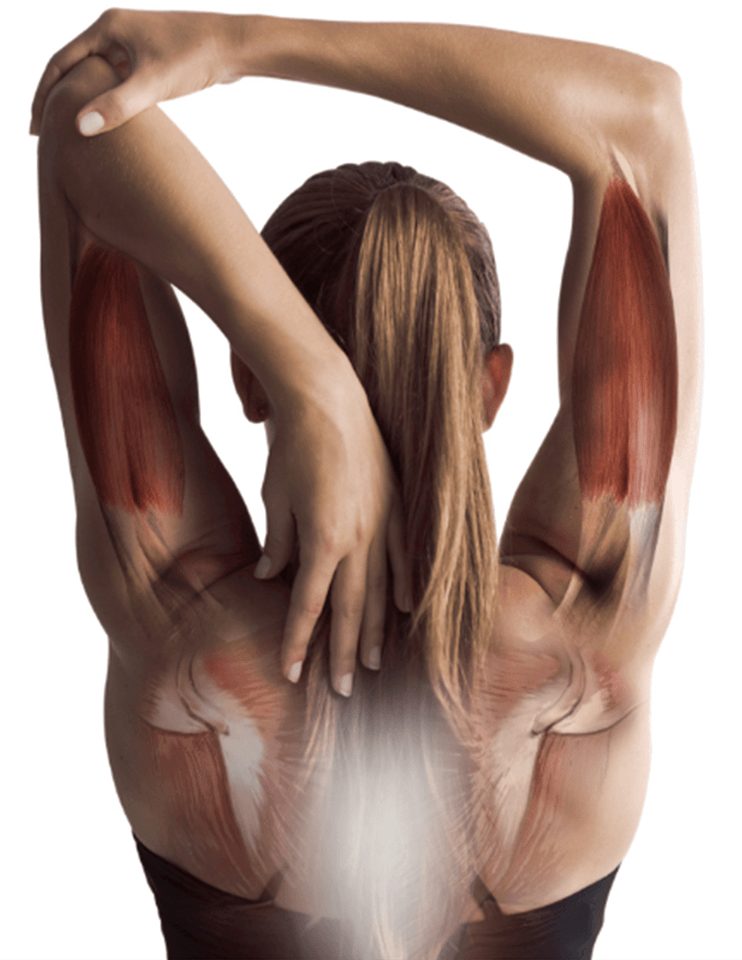
Muscles move our bodies
When doing sports muscles are trained and specific movements are improved. Within the training everybody is looking for different goal, which might differ from increase in muscle mass or to reach a long activity duration (endurance). To reach the goal different ways are taken. As well specific collagen peptides can support this process. Clinical studies1,2 have shown that the intake of specific collagen peptides combined with specific physical training has led to maintain or increase muscle mass.
With our age as well muscle performance is reducing. 3,4,5. To counteract regular physical activity is very important. As well a healthy life style is beneficial. In addition, it has been observed that the intake of specific collagen peptides might support the process of maintaining muscle mass in age when combined with physical activity1,2 and mobility can be preserved.
References
- Zdzieblik D, Oesser S, Baumstark MW, Gollhofer A, König D ‘Collagen peptide supplementation in combination with resistance training improves body composition and increases muscle strength in elderly sarcopenic men: a randomised controlled Trial.’ Br J Nutr. 2015 Oct 28;114(8):1237-45. doi: 10.1017/S0007114515002810.
- Jendricke P, Centner C, Zdzieblik D, Gollhofer A, König D ‘Specific Collagen Peptides in Combination with Resistance Training Improve Body Composition and Regional Muscle Strength in Premenopausal Women: A Randomized Controlled Trial.’ Nutrients. 2019 Apr 20;11(4). pii: E892. doi: 10.3390/nu11040892.
- Wang C, Bai L ‘Sarcopenia in the elderly: basic and clinical issues.’ Geriatr Gerontol Int, 2012 12, 388–396.
- Walston JD ‘Sarcopenia in older adults.’ Curr Opin Rheumatol. 2012, 24, 623–627.
- Mayer F, Gollhofer A & Berg A ‘Krafttraining mit Älteren und chronisch Kranken (Resistance training in elderly or chronically ill subjects).’ Deutsch Z Sportmed 2003, 54, 88–94.